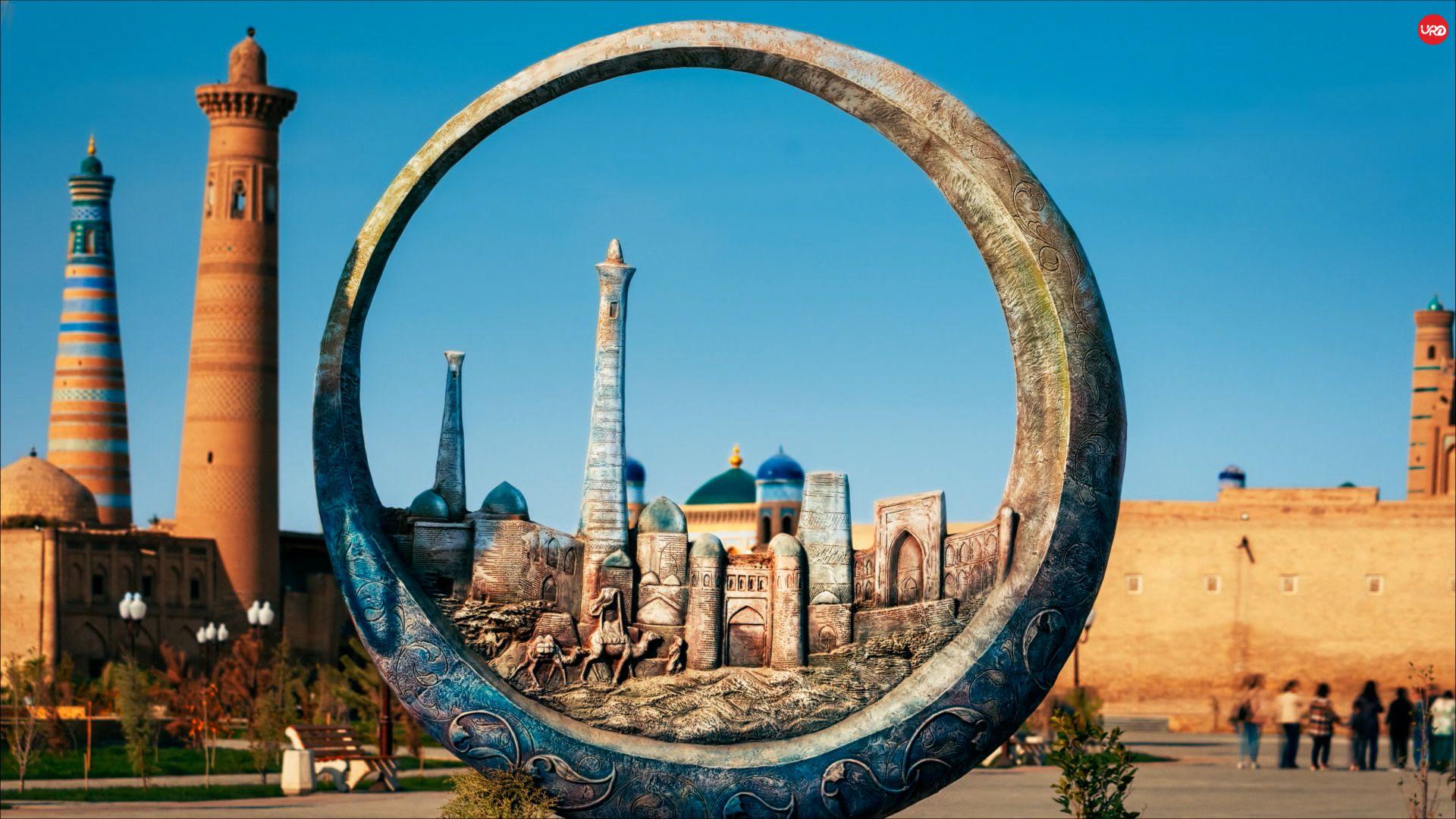
Khiva – Uzbekistan’s Open-Air Museum
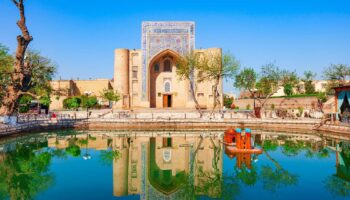
Step into a storybook of silk, sand, and stone in Khiva, a perfectly preserved medieval city where every corner echoes with legends of caravans and khans. Enclosed within towering clay walls, Itchan Kala, the inner fortress of Khiva, is a UNESCO World Heritage Site and feels like an open-air museum frozen in time. Marvel at the striking Kalta Minor Minaret, climb the Islam Khoja Minaret for panoramic views, and explore the ornate Tash Khauli Palace, once home to Khiva’s royal harem. Narrow alleys, sunlit courtyards, and elaborately tiled mosques transport you to the golden age of the Silk Road. The city glows beautifully at dusk, as the desert breeze whispers through ancient minarets and ochre-colored domes.
 Best Time to Visit:
April to May and September to October – ideal for mild temperatures and golden-hour photography.
 Distance:
Roughly 1,000 km from Tashkent – accessible via flight to Urgench, followed by a 35-minute drive to Khiva.
 Travel Tips:
- Hire a local guide to uncover hidden courtyards and untold stories.
- Walk atop the city walls at sunset for breathtaking views.
- Dress lightly, but respectfully – the desert heat can be intense midday.
 Culture & Food:
Khiva offers a rich culinary tradition influenced by its desert roots. Enjoy tandir kabob, shivit oshi (green noodle dish unique to Khiva), and melons, known to be among the sweetest in Uzbekistan. Local markets brim with handwoven carpets, carved wooden columns, and miniature paintings. Cultural performances with folk music and traditional dance often take place in restored madrasahs, enriching your evening experience.
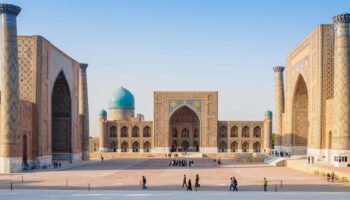
Step into the timeless splendor of Samarkand, a city that has dazzled travelers and emperors for over 2,500 years. Known as the heart of the Silk Road, Samarkand is a magnificent blend of Persian-Islamic architecture, turquoise domes, mosaic-covered madrasahs, and ancient legends. The iconic Registan Square is a masterpiece of symmetry and color, while the Shah-i-Zinda necropolis offers a sacred and artistic journey through Uzbekistan’s spiritual heritage. Wander through bustling bazaars, explore the Bibi-Khanym Mosque, and feel the aura of Gur-e-Amir, the final resting place of conqueror Tamerlane. A living museum under the open sky, Samarkand is a city that brings history to life.
Best Time to Visit:
March to May and September to October offer mild temperatures and clear skies, ideal for sightseeing and photography.
Distance:
Roughly 300 km from Tashkent – just 2 hours via the high-speed Afrosiyob train.
Travel Tips:
- Book Registan night light show tickets in advance.
- Wear modest attire for religious sites.
- Early mornings offer fewer crowds and soft golden lighting for photography.
Culture & Food:
Samarkand is famous for its non (bread baked in tandoor ovens) and sweet-style plov, often enriched with raisins and carrots. Don’t miss out on halva sweets, green tea, and shopping for handcrafted ceramics and silk scarves at local bazaars. The city is culturally rich with Uzbek traditions influenced by Persian, Turkic, and Islamic heritage – evident in its music, dress, and hospitality.